
Bias in Clinical Data Collection and Creation
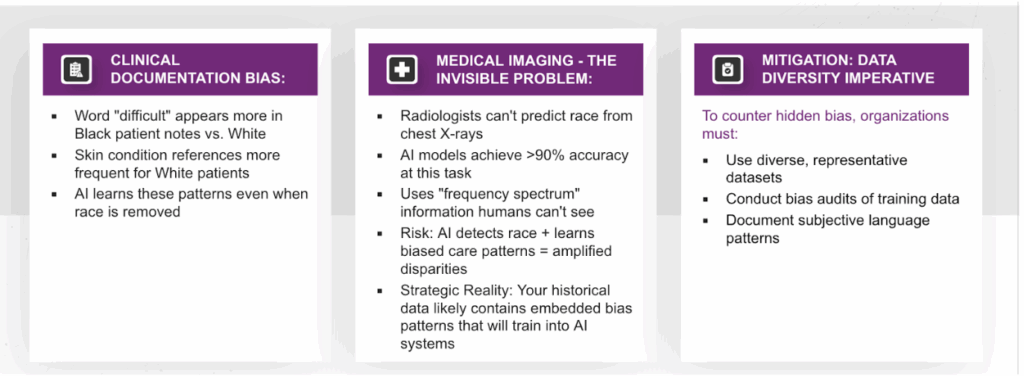
Introduction: The “Embedded” Problem When we talk about bias in AI, we often assume the problem is simply missing data—that we just need more diverse patients in the database. While representation is critical, a more insidious problem exists: Bias that is already embedded in the data itself. Healthcare data is not a neutral record of […]
Measuring What Matters: The Strategic Imperative
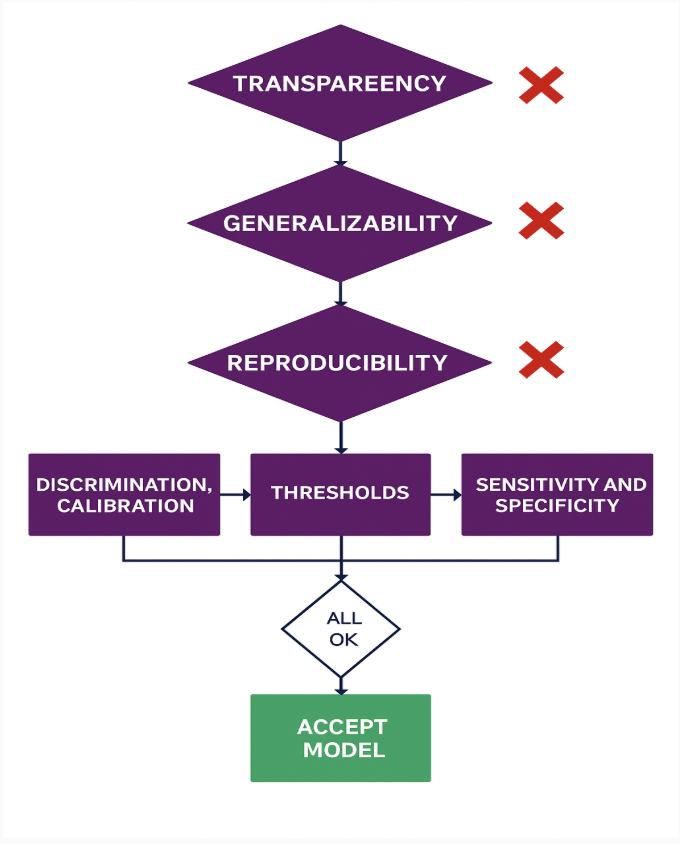
The Final Bridge We have explored the technical depths of discrimination, calibration, and threshold selection. We have examined the rigorous demands of transparency and reproducibility. Now, we must ask the final question: Why does this matter? It is not just about better math. It is about building a healthcare system that works. Evaluating AI’s true […]
Connecting Evaluation to Strategy: The Governance of AI
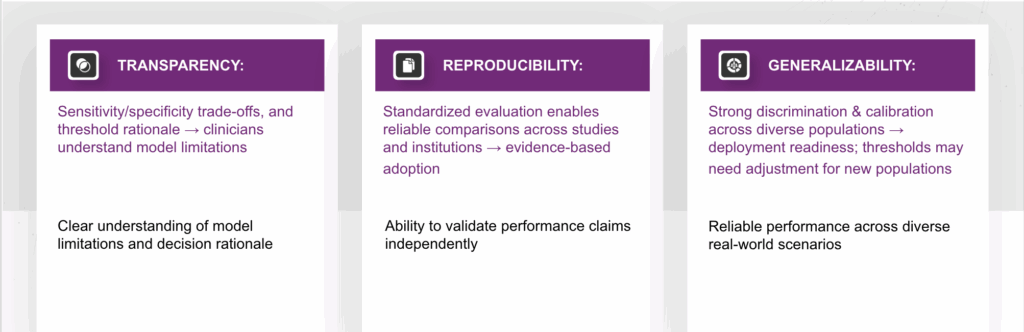
In our previous posts, we discussed the mathematical tools of evaluation—discrimination, calibration, and threshold selection. But these are not just abstract statistics for data scientists. They are the concrete evidence of an organization’s values. How you evaluate an AI model directly reflects your strategic principles. If you measure only accuracy, you signal that you care […]
Moving Beyond Accuracy: Advanced Evaluation in AI
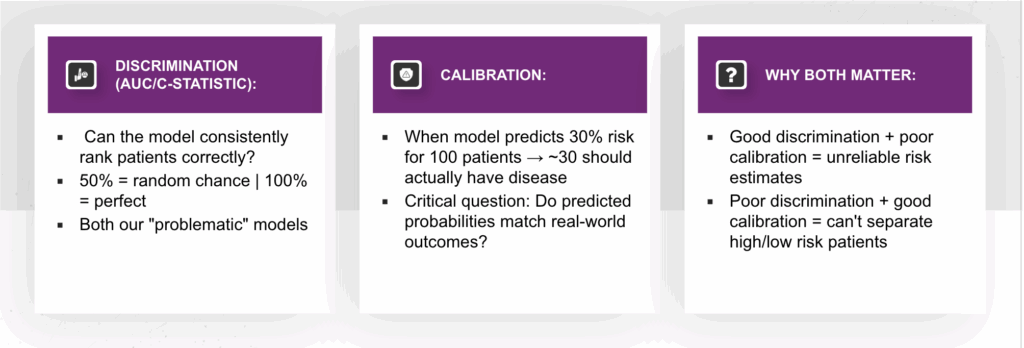
Introduction: The Accuracy Trap In the high-stakes world of clinical AI, a single “accuracy” score rarely tells the whole story. As we move from experimental models to tools that influence patient care, we must adopt a more sophisticated language of evaluation. It is no longer enough to ask if a model is right; we must […]
Measuring What Matters: Evaluating AI’s True Clinical Impact
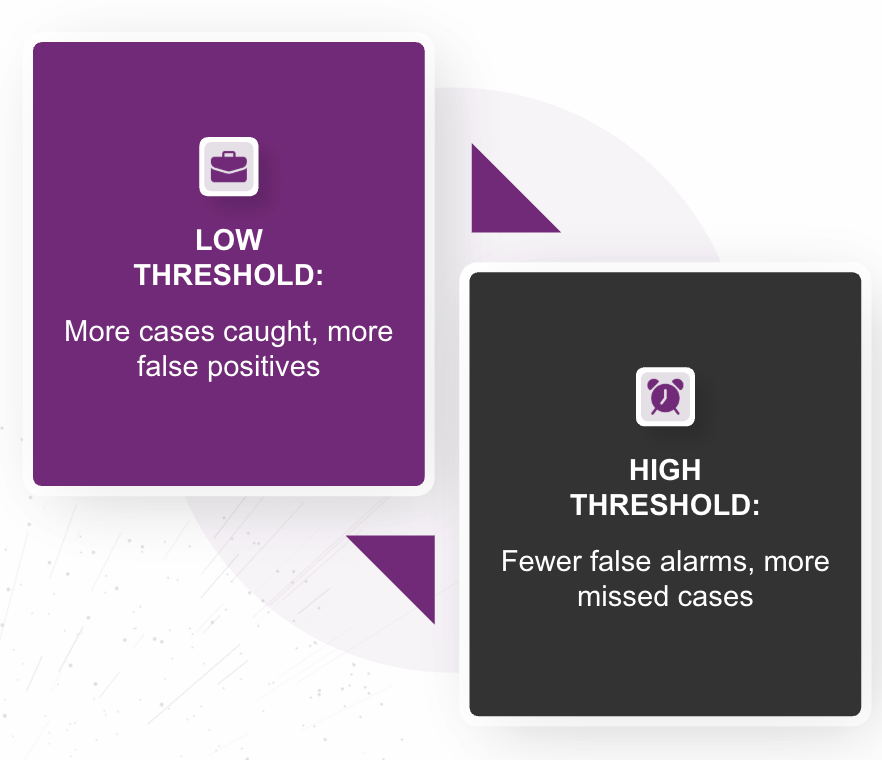
In the race to deploy AI in healthcare, headlines are often dominated by impressive accuracy scores. A model boasting “99% accuracy” sounds revolutionary—but in the nuanced world of oncology, a single metric can hide dangerous flaws. To build systems that clinicians can actually trust, we must look beyond the surface. We need a rigorous evaluation […]
Attributes of a Good AI Model
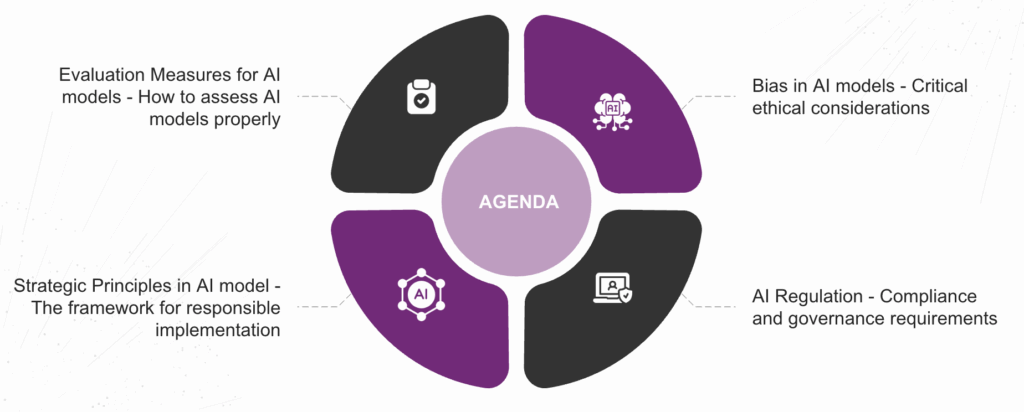
Understanding what AI can do is only the beginning. The true test lies in how rigorously, responsibly, and reproducibly it performs within real clinical ecosystems. From Innovation to Integration This transition—from innovation in isolation to integration with intention—defines the next phase of AI in healthcare. It is no longer enough to build accurate models; the […]
The “Deployment Cliff”: Why Validated Models Fail in the Real World
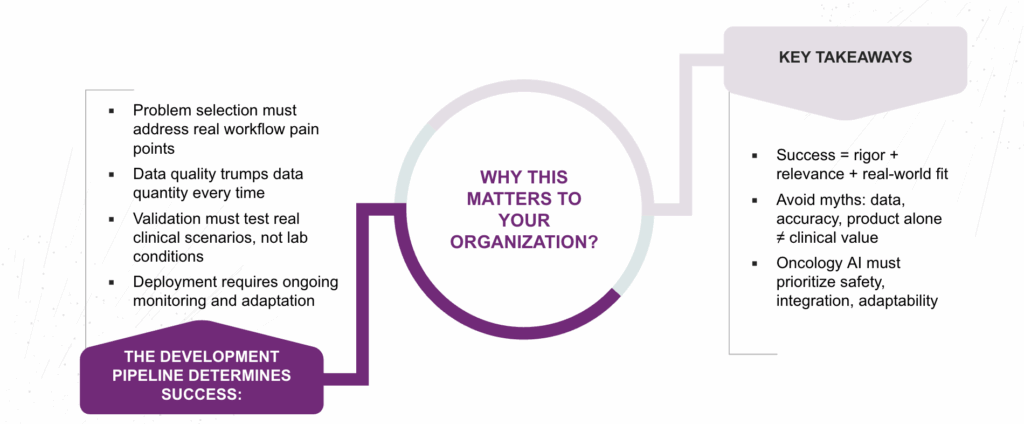
The transition from a frozen model in a lab to a live tool in a hospital is the most dangerous phase of the AI lifecycle. This is where the “Validation Gap” becomes visible: fewer than 20% of published AI studies undergo rigorous prospective validation. The Validation Gap Retrospective testing (looking at past data) is easy. […]
Inside the Engine: How to Train Oncology AI Without “Cheating”
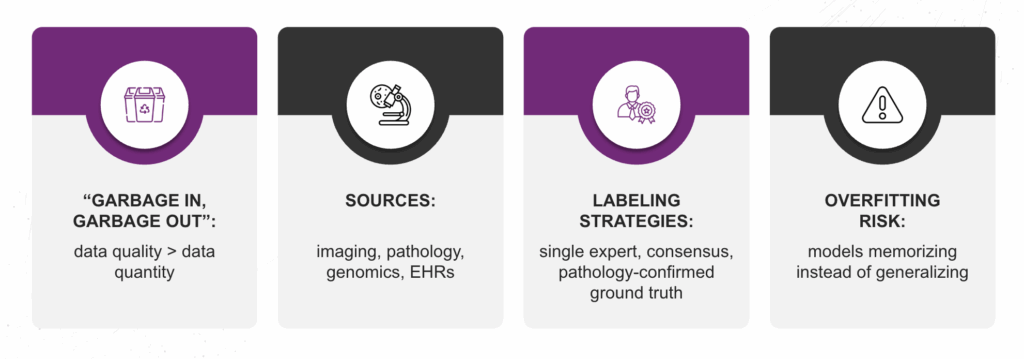
Data quality determines everything. Sophisticated algorithms cannot compensate for biased or poorly curated datasets. But once you have the data, how do you train a model that is safe for patients? The “Garbage In, Garbage Out” Reality In radiation oncology, data acquisition is uniquely complex. We aren’t just dealing with spreadsheets; we are dealing with […]
3 Myths Derailing AI in Healthcare (And What Actually Works)
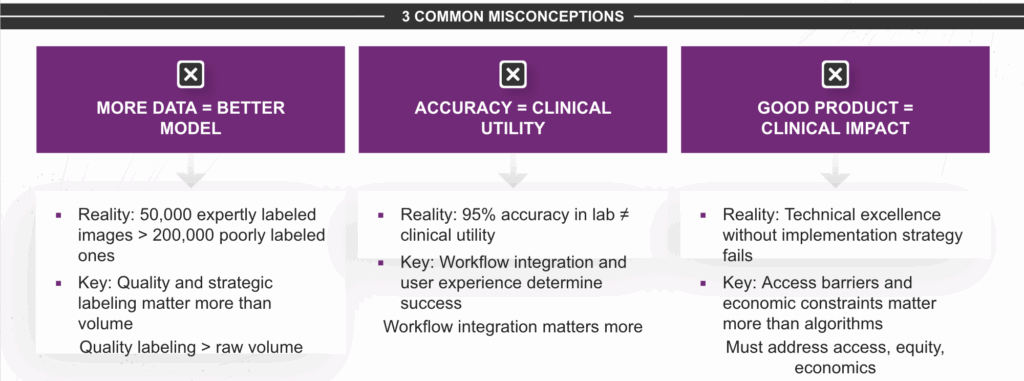
The gap between research promise and clinical reality often stems from three persistent misconceptions. These myths don’t just slow progress; they lead to expensive failures that could otherwise transform patient care. Myth 1: “More Data is Always Better” There is a belief that simply accumulating massive datasets guarantees a better model. This is false. In […]
The Translation Gap: Why Most Oncology AI Fails to Reach the Clinic
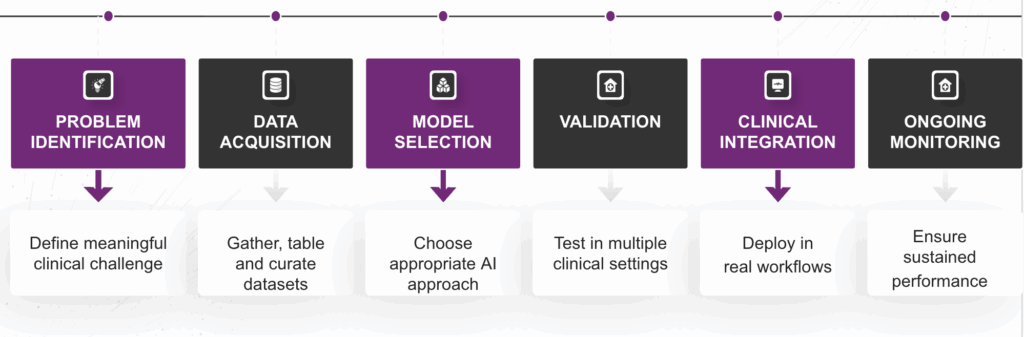
Artificial intelligence holds transformative potential in oncology, yet a persistent paradox remains. Despite a proliferation of research papers and experimental success, the oncology community faces a “translation gap.” We are seeing remarkable algorithms in the lab, but a struggle to convert them into real-world clinical impact. The problem is rarely the math. Success in oncology […]