
Measuring What Matters: The Strategic Imperative
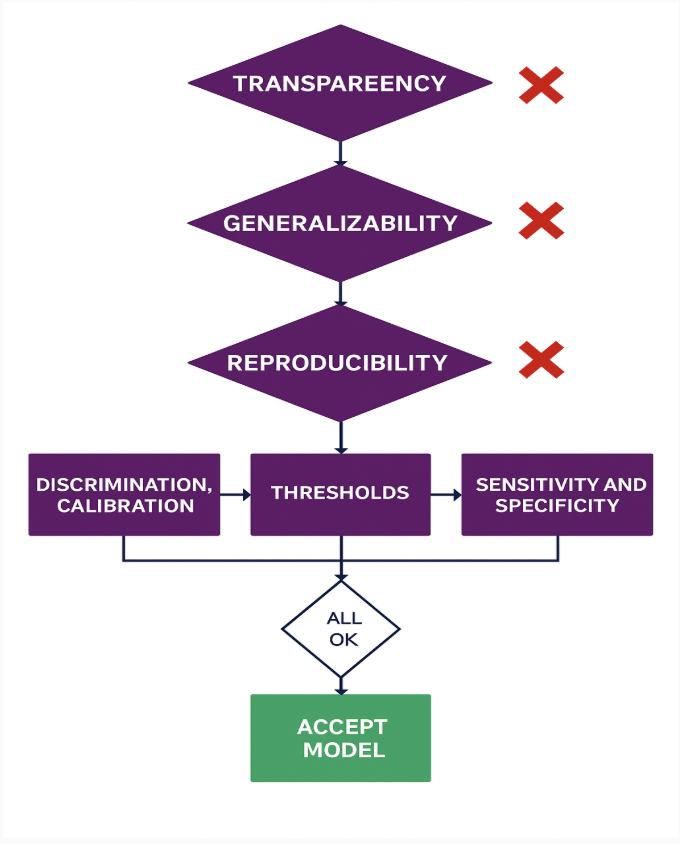
The Final Bridge We have explored the technical depths of discrimination, calibration, and threshold selection. We have examined the rigorous demands of transparency and reproducibility. Now, we must ask the final question: Why does this matter? It is not just about better math. It is about building a healthcare system that works. Evaluating AI’s true […]
Connecting Evaluation to Strategy: The Governance of AI
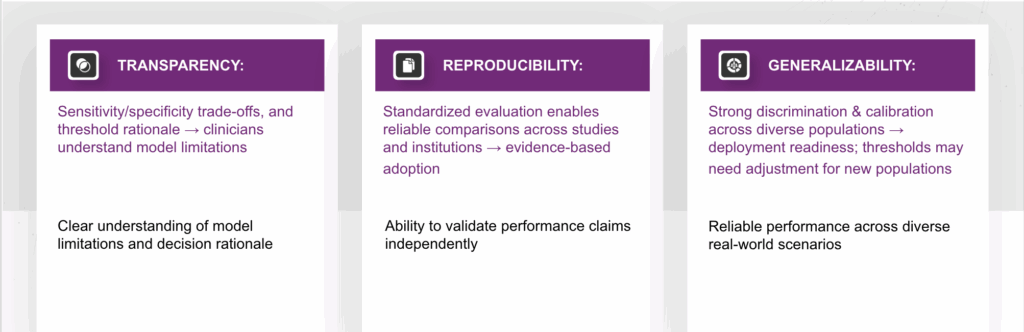
In our previous posts, we discussed the mathematical tools of evaluation—discrimination, calibration, and threshold selection. But these are not just abstract statistics for data scientists. They are the concrete evidence of an organization’s values. How you evaluate an AI model directly reflects your strategic principles. If you measure only accuracy, you signal that you care […]
Moving Beyond Accuracy: Advanced Evaluation in AI
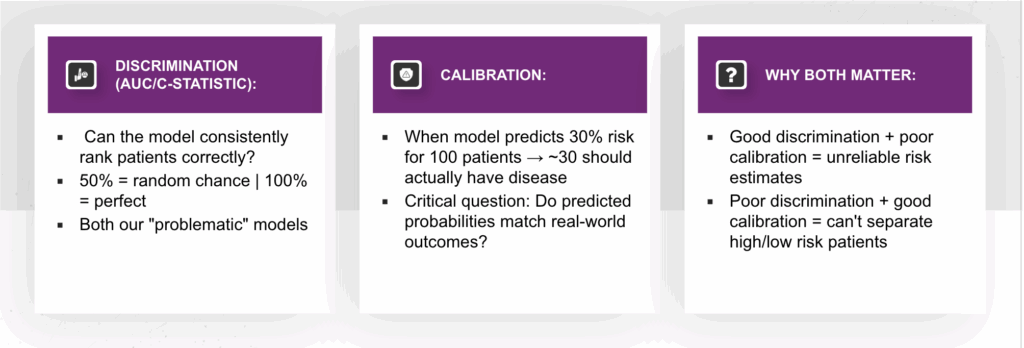
Introduction: The Accuracy Trap In the high-stakes world of clinical AI, a single “accuracy” score rarely tells the whole story. As we move from experimental models to tools that influence patient care, we must adopt a more sophisticated language of evaluation. It is no longer enough to ask if a model is right; we must […]
Measuring What Matters: Evaluating AI’s True Clinical Impact
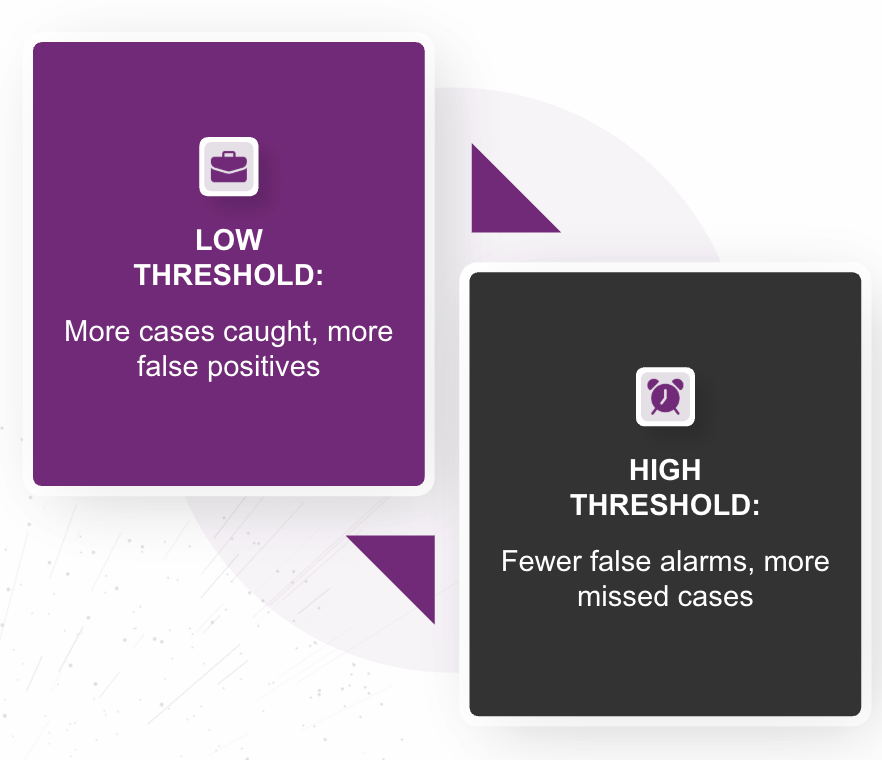
In the race to deploy AI in healthcare, headlines are often dominated by impressive accuracy scores. A model boasting “99% accuracy” sounds revolutionary—but in the nuanced world of oncology, a single metric can hide dangerous flaws. To build systems that clinicians can actually trust, we must look beyond the surface. We need a rigorous evaluation […]
Attributes of a Good AI Model
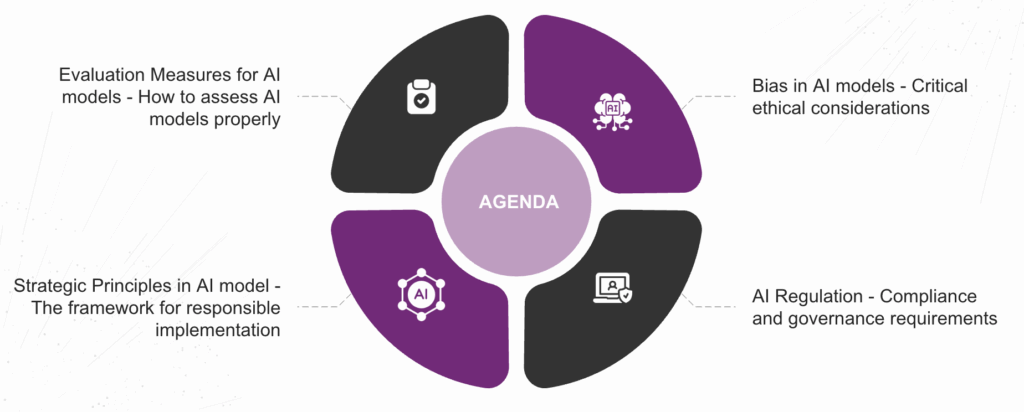
Understanding what AI can do is only the beginning. The true test lies in how rigorously, responsibly, and reproducibly it performs within real clinical ecosystems. From Innovation to Integration This transition—from innovation in isolation to integration with intention—defines the next phase of AI in healthcare. It is no longer enough to build accurate models; the […]
The “Deployment Cliff”: Why Validated Models Fail in the Real World
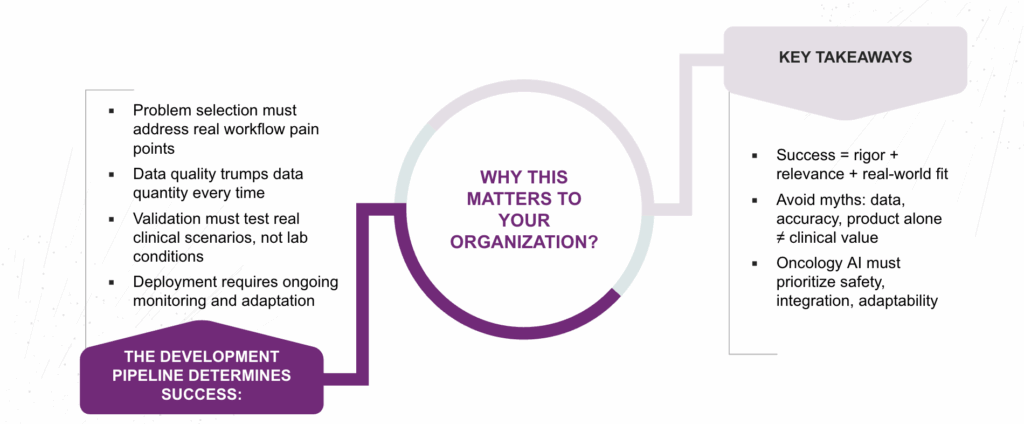
The transition from a frozen model in a lab to a live tool in a hospital is the most dangerous phase of the AI lifecycle. This is where the “Validation Gap” becomes visible: fewer than 20% of published AI studies undergo rigorous prospective validation. The Validation Gap Retrospective testing (looking at past data) is easy. […]
The Foundations of a Revolution: How 2016 Changed Healthcare AI Forever
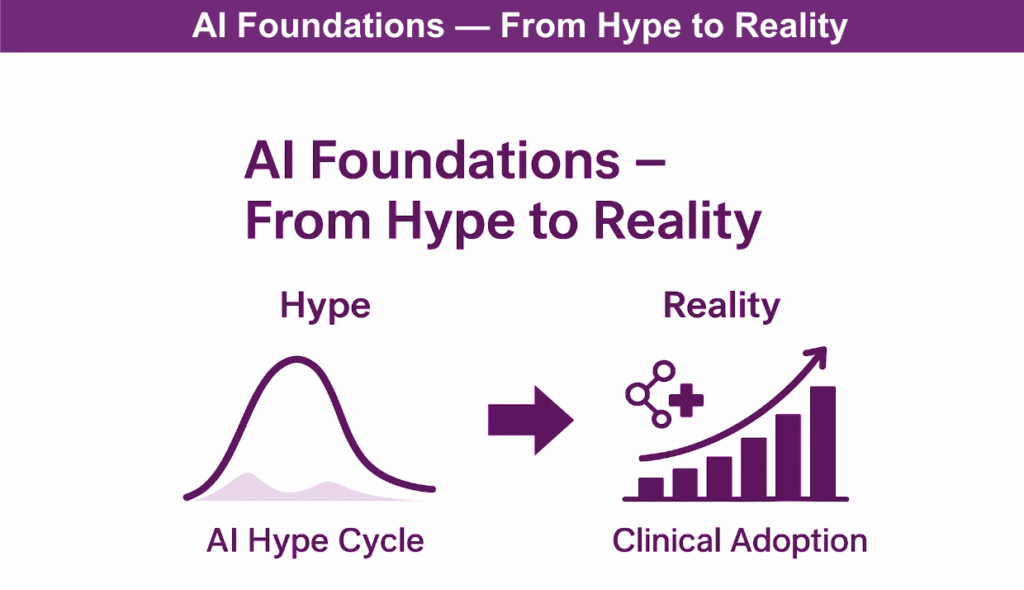
The Foundations of a Revolution: How 2016 Changed Healthcare AI Forever Artificial intelligence in healthcare has evolved far beyond academic prototypes. Yet, to truly understand where we are going and the rapid rise of Generative AI, we must first understand the pivotal moment when the technology matured from an experimental curiosity into a transformative clinical […]
Evidence from Early Adopters: Lessons from AI Integration in Oncology

Data Speaks: What Early Adopters Are Seeing Evidence from leading cancer centers confirms that integrating AI into radiation oncology is not theoretical—it’s transformative. Institutions that have successfully embedded AI into their workflows are already reporting: Crucially, these benefits accrue to clinicians who embrace AI—not those replaced by it. The data supports a simple truth: AI […]
Perception vs. Reality: Will AI Take My Job?
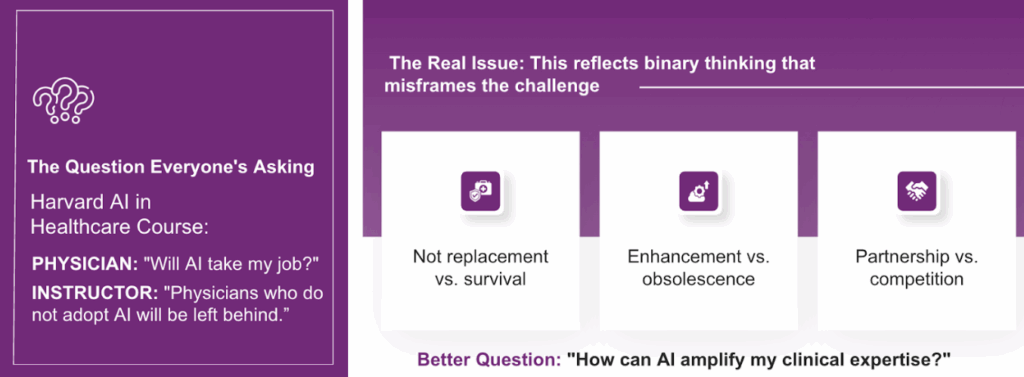
“Physicians who do not adopt AI will be left behind.” That striking statement came during an office hours session in Harvard’s AI in Healthcare course, when a practicing physician voiced a question that keeps many clinicians awake at night: “Will AI take my job?” The instructor’s answer reframed the conversation entirely. Clinicians aren’t facing replacement […]
Beyond Point Solutions: A Win–Win–Win-Win Framework for Embedding AI into Oncology for Sustainable Impact
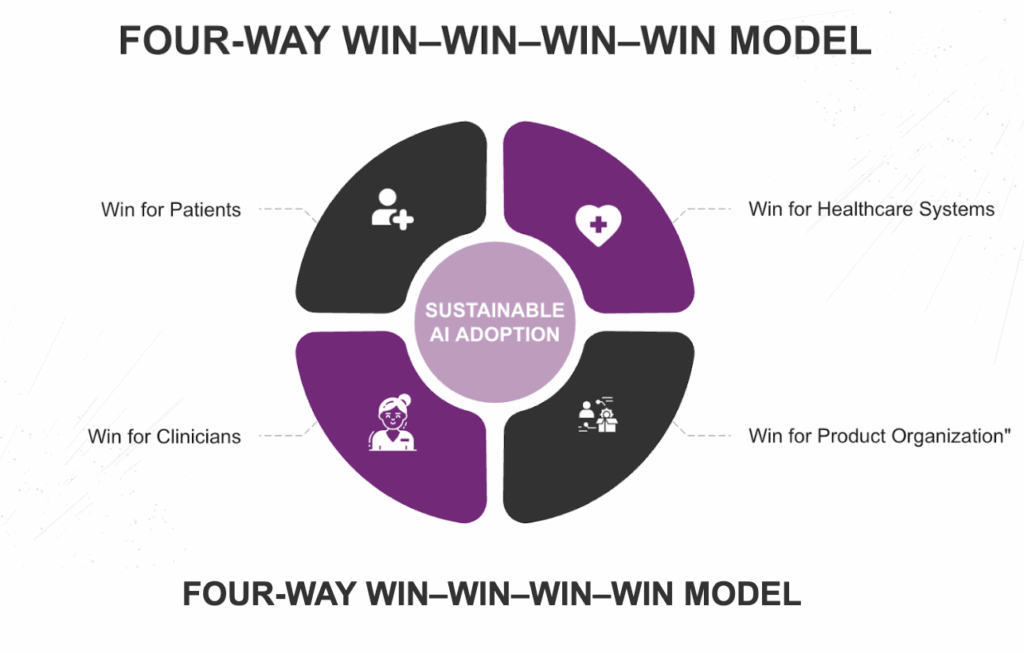
Beyond Point Solutions: A Win–Win–Win-Win Framework for Embedding AI into Oncology for Sustainable Impact Artificial Intelligence (AI) is often introduced into oncology with great promise of faster treatment planning, improved precision, and reduced clinician workload. But too often, these innovations remain isolated point solutions, powerful tools solving single problems in a vacuum. The outcome is […]