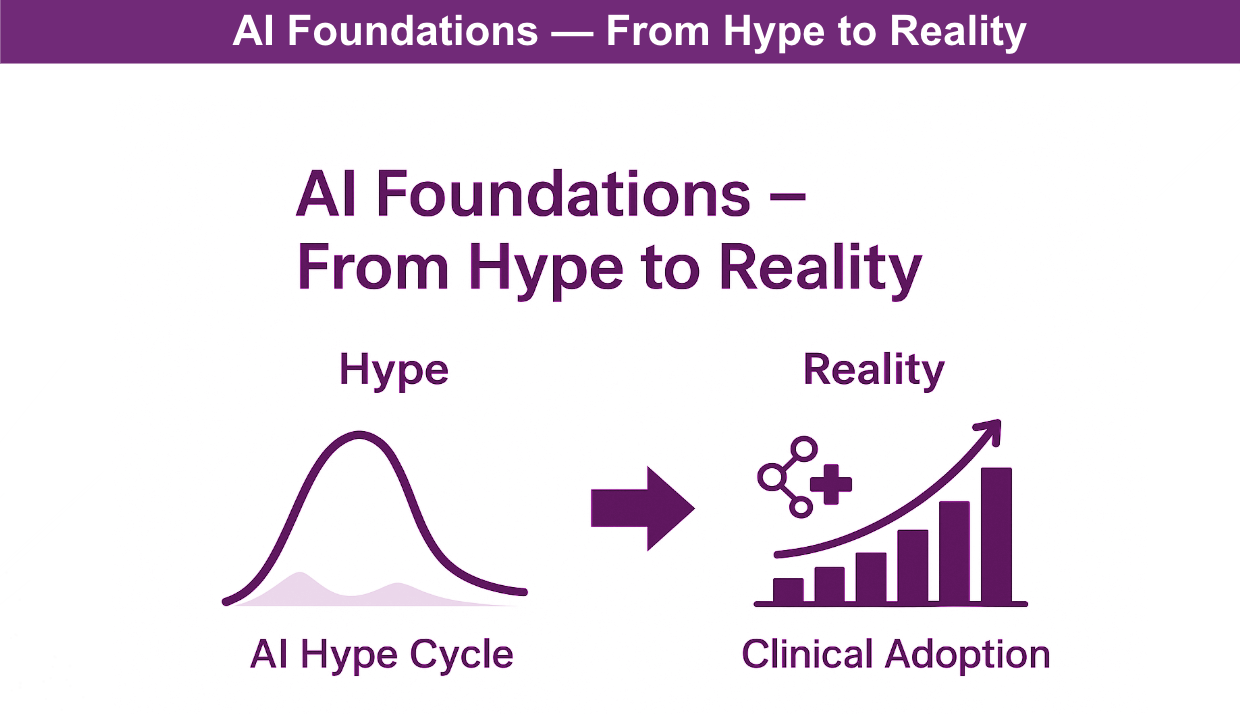
The Foundations of a Revolution: How 2016 Changed Healthcare AI Forever
Artificial intelligence in healthcare has evolved far beyond academic prototypes. Yet, to truly understand where we are going and the rapid rise of Generative AI, we must first understand the pivotal moment when the technology matured from an experimental curiosity into a transformative clinical tool.
The 2016 Turning Point
To appreciate this trajectory, we must look back at the groundwork laid during a short but critical window between 2016 and 2017. During this time, three landmark studies proved AI’s clinical viability, effectively setting the stage for every innovation that has followed.
It began when Google published a study in JAMA demonstrating that supervised deep learning could match or exceed physician performance in detecting diabetic retinopathy. This became one of the journal’s most cited papers of the decade. Subsequently, Stanford researchers confirmed comparable success in dermatology and chest X-ray interpretation. Together, these studies extended the deep learning breakthroughs of the tech world into medicine, finally leveraging the unique advantage of high-quality, labeled medical datasets.
From Diagnostics to Discovery
Crucially, the impact of these findings quickly moved beyond theoretical research papers. For instance, Digital Diagnostics launched an autonomous diabetic retinopathy system—the first FDA-cleared AI diagnostic tool to operate without human oversight. This achievement marked the dawn of true clinical autonomy.
Moreover, this era of “Supervised Learning” didn’t stop with diagnostics; simultaneously, it extended into drug discovery, where AI began to rewrite pharmaceutical timelines. A landmark example emerged from Harvard and MIT’s Broad Institute, where researchers discovered halicin, a novel antibiotic identified through AI-driven compound screening.
Building the Bedrock
Ultimately, understanding these foundations is critical because they represent the “pattern recognition” era of AI. As we move into the next phase: Generative AI and Large Language Models, we are building upon this bedrock of proven accuracy and clinical validation.
Authored By: Padmasri Bhetanabhotla