
Regulating Intelligence: The New Frontier of Clinical AI Governance

Introduction: The Next Frontier As artificial intelligence becomes deeply embedded in healthcare decision-making, we are entering a new phase of adoption. We have moved past the era of experimental pilots and into the era of systemic accountability. Regulation and governance have emerged as the next frontier in ensuring that AI enhances rather than endangers patient […]
Toward a Safety-First Framework: What AI Can Learn from Aviation
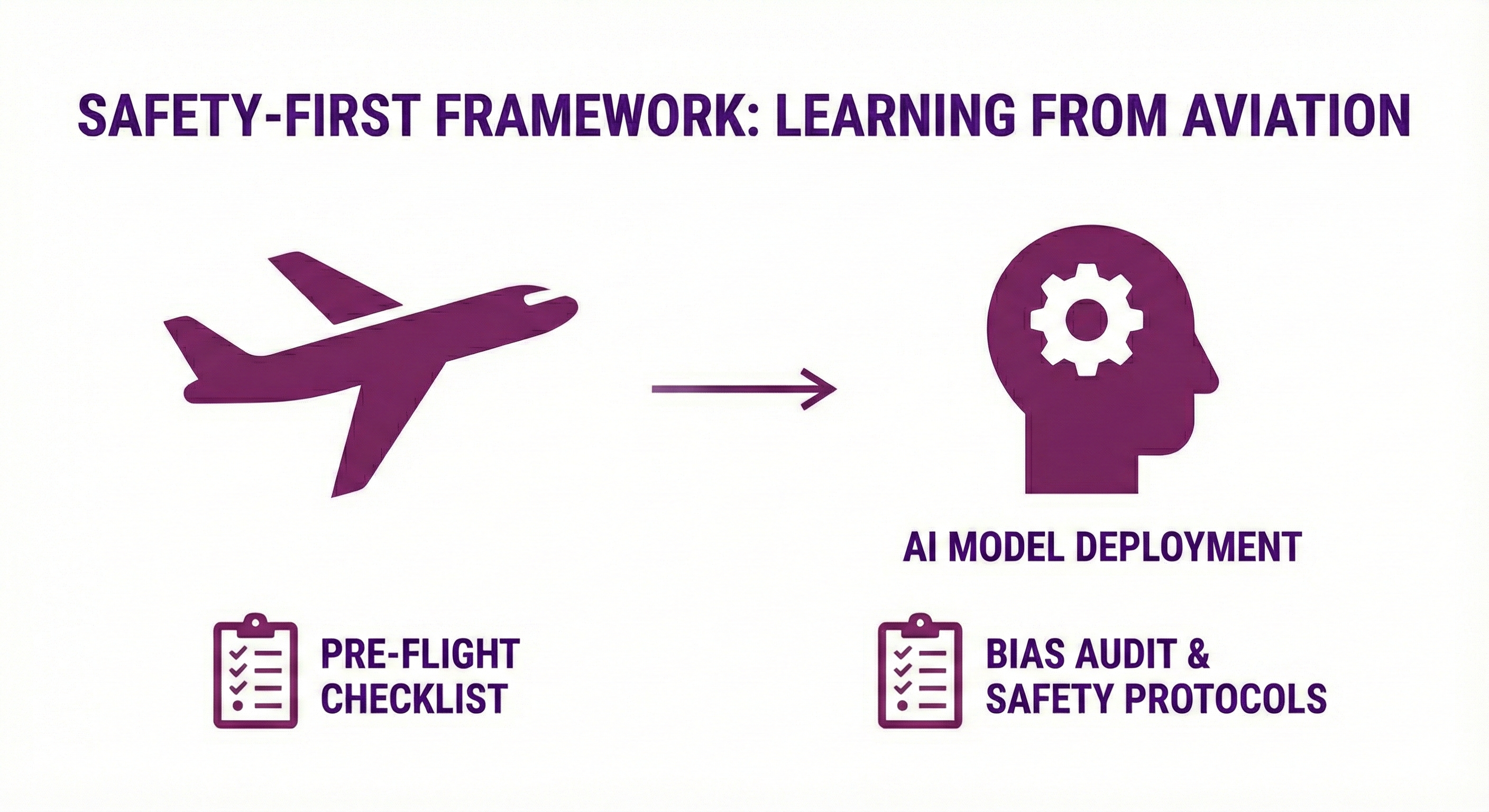
Introduction: The Pilot and the Algorithm In this series, we have explored the technical fractures where bias enters the AI pipeline—from hidden proxies in data to the “Group Attribute Paradox” in algorithms. But fixing these individual fractures is not enough. To truly ensure equity, healthcare needs a fundamental shift in culture. We do not need […]
The Last Mile: Bias in Algorithms and Human Interaction
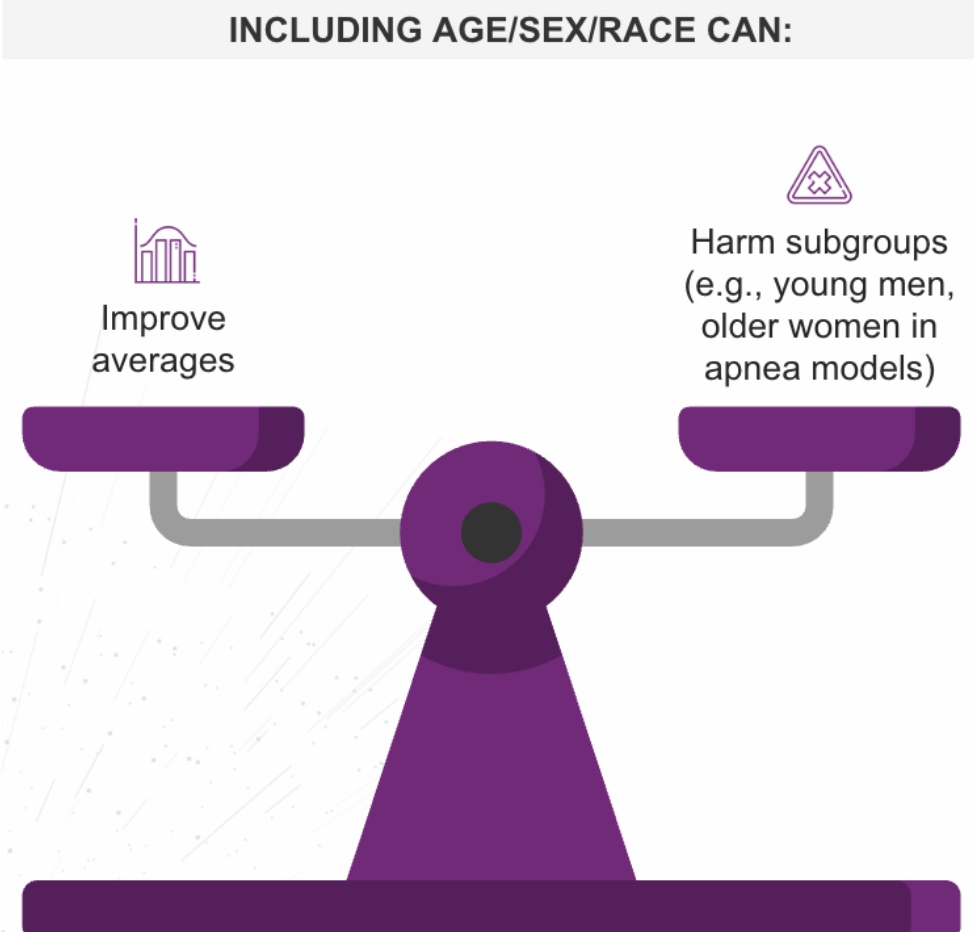
Introduction: The Paradox of Optimization In the final stages of the AI pipeline, we encounter a counter-intuitive reality. We often assume that giving an AI more information about a patient—like their age, sex, or race—will automatically make it “fairer.” However, Stage 3 of our pipeline analysis reveals the Group Attribute Paradox: including demographic attributes can […]
Bias in Labeling: The Hidden Gap Between Observation and Action
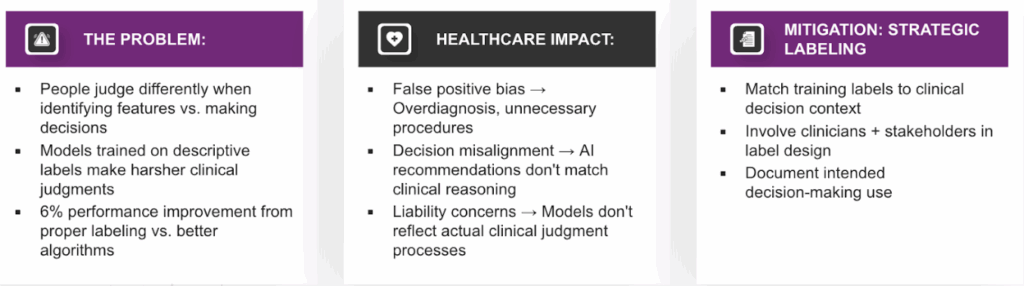
Introduction: The Question Matters More Than the Answer In the second stage of our pipeline analysis, we face a subtle but dangerous source of bias: Outcome Definition. We often assume that labeling data is a neutral task—simply identifying what is in an image or a chart. But AI development often falls into a trap known […]
Bias in Clinical Data Collection and Creation
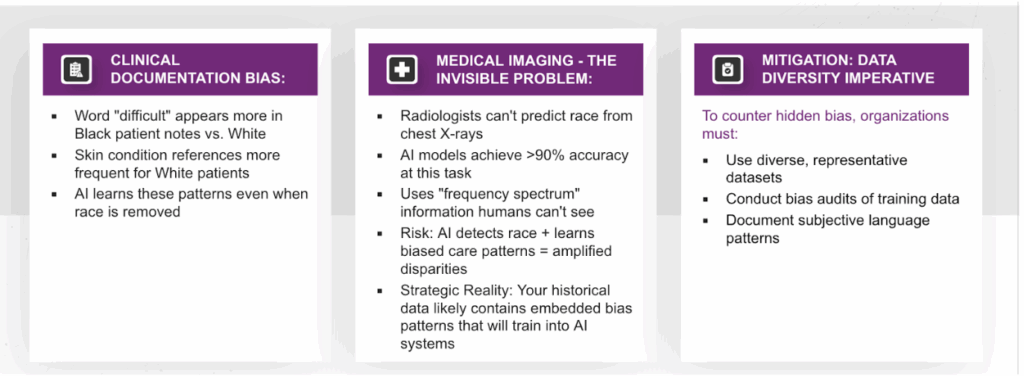
Introduction: The “Embedded” Problem When we talk about bias in AI, we often assume the problem is simply missing data—that we just need more diverse patients in the database. While representation is critical, a more insidious problem exists: Bias that is already embedded in the data itself. Healthcare data is not a neutral record of […]
Bias Across the AI Pipeline: From Data to Deployment

The Double-Edged Sword Healthcare AI systems possess unprecedented potential to improve decision-making and outcomes through embodied health data. Yet, that potential carries a heavy ethical responsibility. Biased AI systems do not just fail; they can perpetuate and amplify existing disparities, actively harming vulnerable populations. To deploy AI safely, we must recognize that bias is not […]
Bias by Design: Ensuring Fair and Ethical AI in Oncology
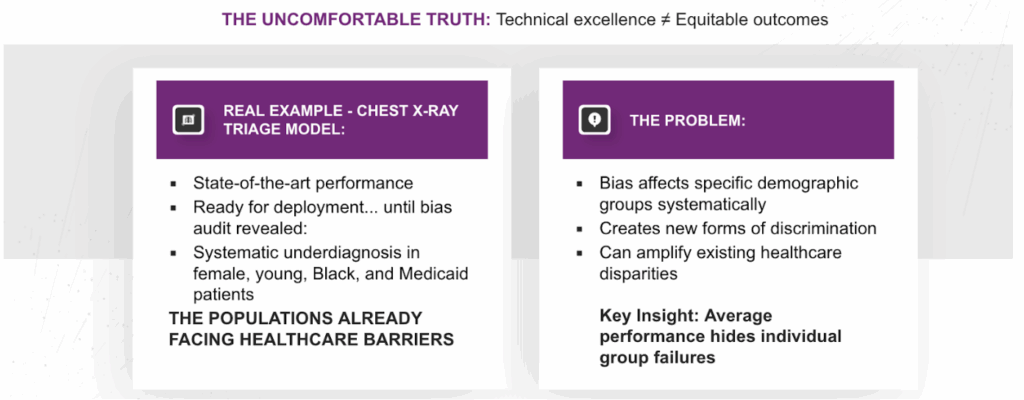
Executive Summary The fourth white paper in the Beyond Point Solutions: A Win–Win–Win Framework for Embedding AI into Oncology series examines one of the most critical dimensions of responsible AI adoption — bias across the AI pipeline. Bias is not a single failure point; it is a pipeline-wide vulnerability. It begins with incomplete or unrepresentative […]
Measuring What Matters: The Strategic Imperative
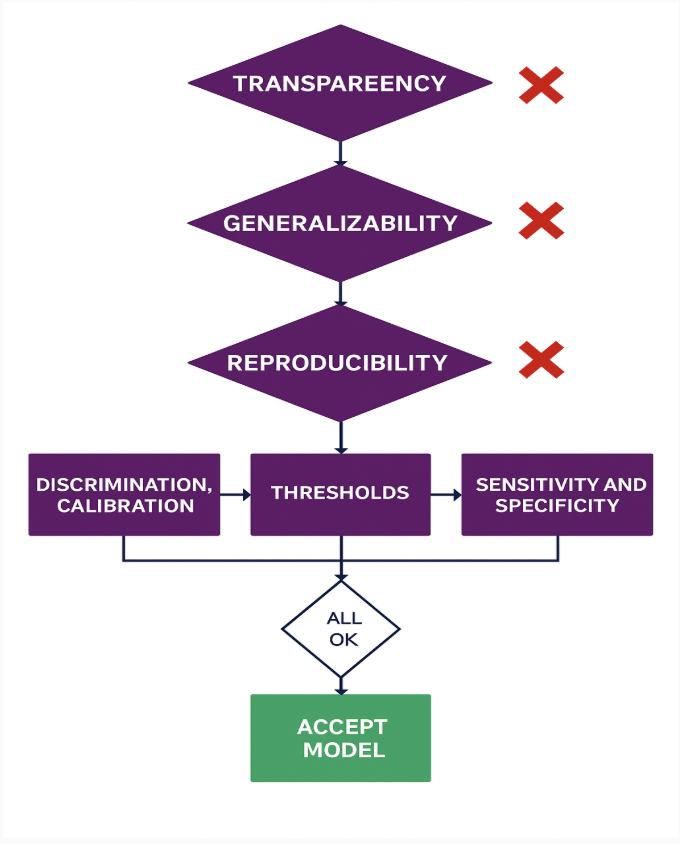
The Final Bridge We have explored the technical depths of discrimination, calibration, and threshold selection. We have examined the rigorous demands of transparency and reproducibility. Now, we must ask the final question: Why does this matter? It is not just about better math. It is about building a healthcare system that works. Evaluating AI’s true […]
Connecting Evaluation to Strategy: The Governance of AI
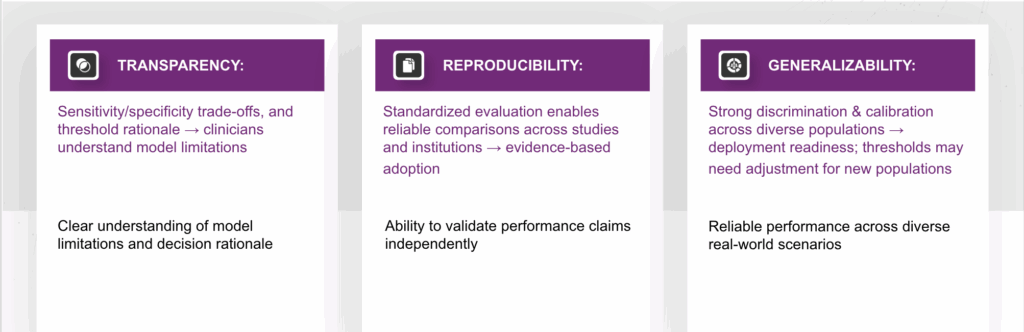
In our previous posts, we discussed the mathematical tools of evaluation—discrimination, calibration, and threshold selection. But these are not just abstract statistics for data scientists. They are the concrete evidence of an organization’s values. How you evaluate an AI model directly reflects your strategic principles. If you measure only accuracy, you signal that you care […]
Moving Beyond Accuracy: Advanced Evaluation in AI
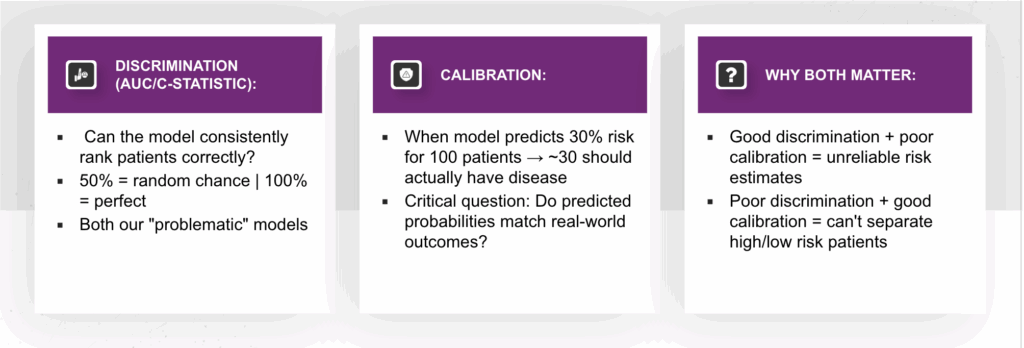
Introduction: The Accuracy Trap In the high-stakes world of clinical AI, a single “accuracy” score rarely tells the whole story. As we move from experimental models to tools that influence patient care, we must adopt a more sophisticated language of evaluation. It is no longer enough to ask if a model is right; we must […]