
The Future of Oncology AI: Bridging Innovation with Integration

The Strategic Imperative The first wave of oncology AI focused on algorithmic accuracy; the next wave will be defined by integration excellence. The differentiator in healthcare AI is no longer how accurate the model is, but how well organizations can safely embed and scale that intelligence into clinical reality. MedLever’s workflow-first platform transforms AI from […]
The Win–Win–Win–Win Model: Value Across Stakeholders

The Four-Stakeholder Framework Win for Patients: AI-enhanced precision and personalized therapy improve clinical outcomes and care consistency while reducing delays. Win for Clinicians: Integrated AI tools cut administrative burden and repetitive work, freeing providers to focus on patient care. Win for Healthcare Systems: AI-optimized workflows reduce costs, prevent rework, and increase patient throughput using existing […]
Governance in Practice: How Healthcare Organizations Prepare for Regulation

The Compliance Advantage As we conclude our series on regulation, we move from the what (the laws) to the how (the execution). For healthcare providers and AI developers, the evolving regulatory environment is often viewed as a hurdle. However, it should be viewed as a roadmap. The regulatory environment will only become more stringent. Organizations […]
AI Regulation: Balancing Innovation with Ethical Safeguards
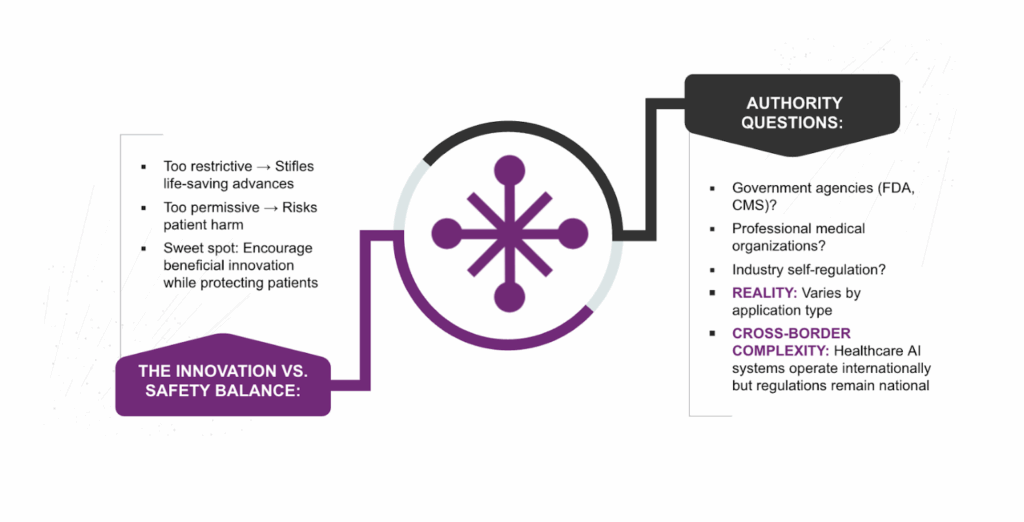
Introduction: The Regulatory Imperative As AI capabilities expand across healthcare, we face a critical tipping point. While the potential for improved patient outcomes is immense, comprehensive regulation has become essential to prevent unintended consequences and misuse. Healthcare AI regulation is not just about bureaucracy; it targets fundamental concerns that directly impact patient safety and health […]
The Last Mile: Bias in Algorithms and Human Interaction
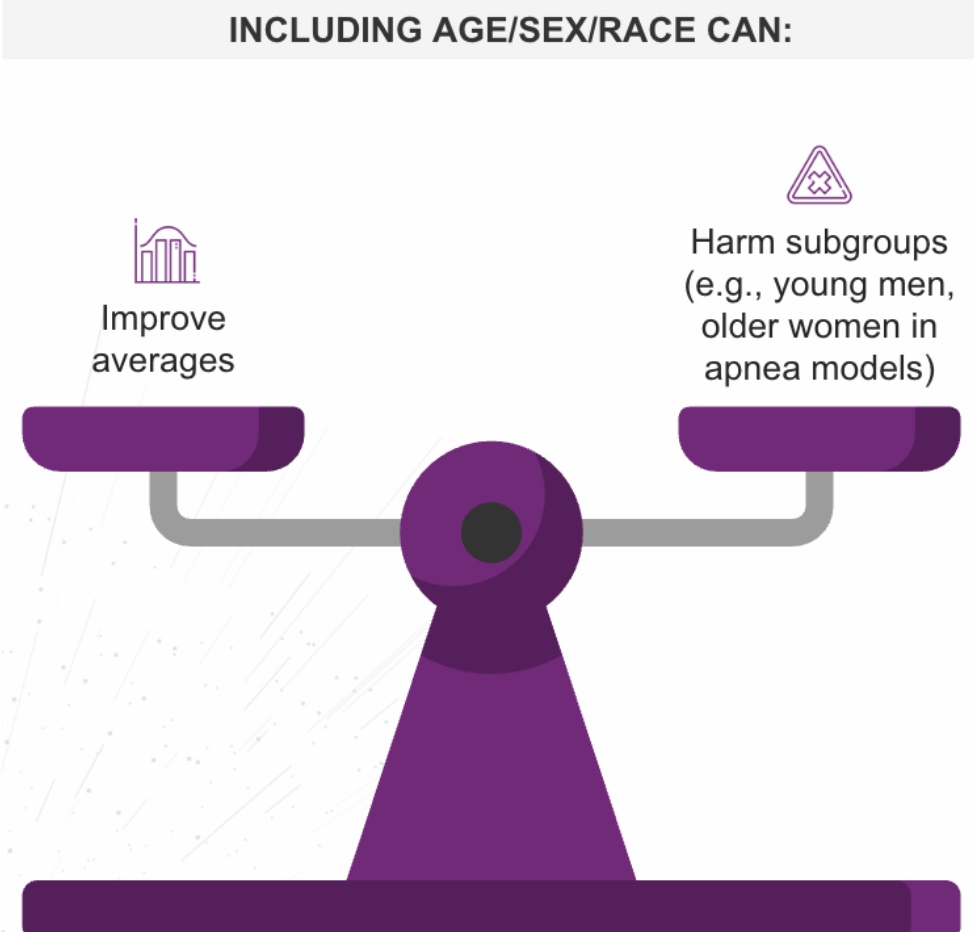
Introduction: The Paradox of Optimization In the final stages of the AI pipeline, we encounter a counter-intuitive reality. We often assume that giving an AI more information about a patient—like their age, sex, or race—will automatically make it “fairer.” However, Stage 3 of our pipeline analysis reveals the Group Attribute Paradox: including demographic attributes can […]
Bias in Labeling: The Hidden Gap Between Observation and Action
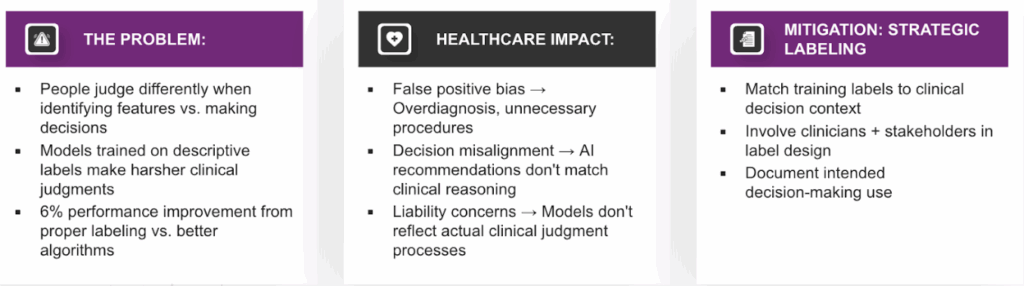
Introduction: The Question Matters More Than the Answer In the second stage of our pipeline analysis, we face a subtle but dangerous source of bias: Outcome Definition. We often assume that labeling data is a neutral task—simply identifying what is in an image or a chart. But AI development often falls into a trap known […]
Bias in Clinical Data Collection and Creation
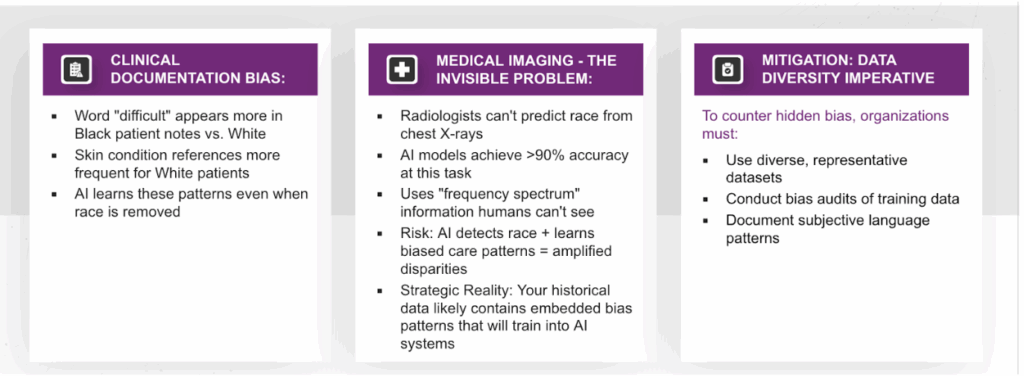
Introduction: The “Embedded” Problem When we talk about bias in AI, we often assume the problem is simply missing data—that we just need more diverse patients in the database. While representation is critical, a more insidious problem exists: Bias that is already embedded in the data itself. Healthcare data is not a neutral record of […]
Moving Beyond Accuracy: Advanced Evaluation in AI
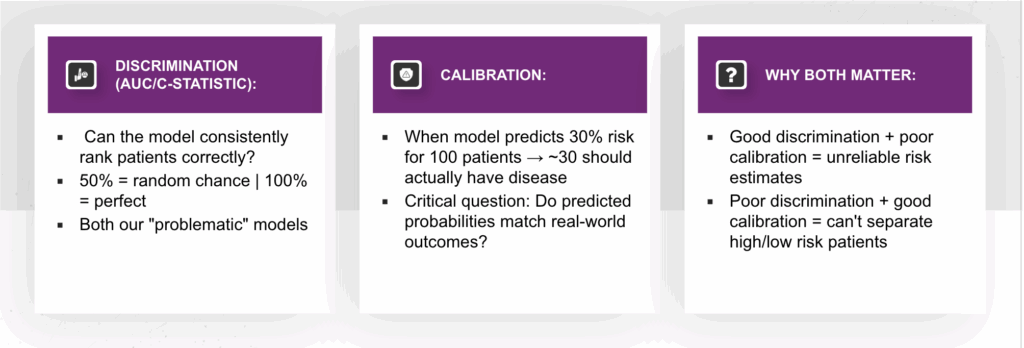
Introduction: The Accuracy Trap In the high-stakes world of clinical AI, a single “accuracy” score rarely tells the whole story. As we move from experimental models to tools that influence patient care, we must adopt a more sophisticated language of evaluation. It is no longer enough to ask if a model is right; we must […]
Beyond Point Solutions: A Win–Win–Win-Win Framework for Embedding AI into Oncology for Sustainable Impact
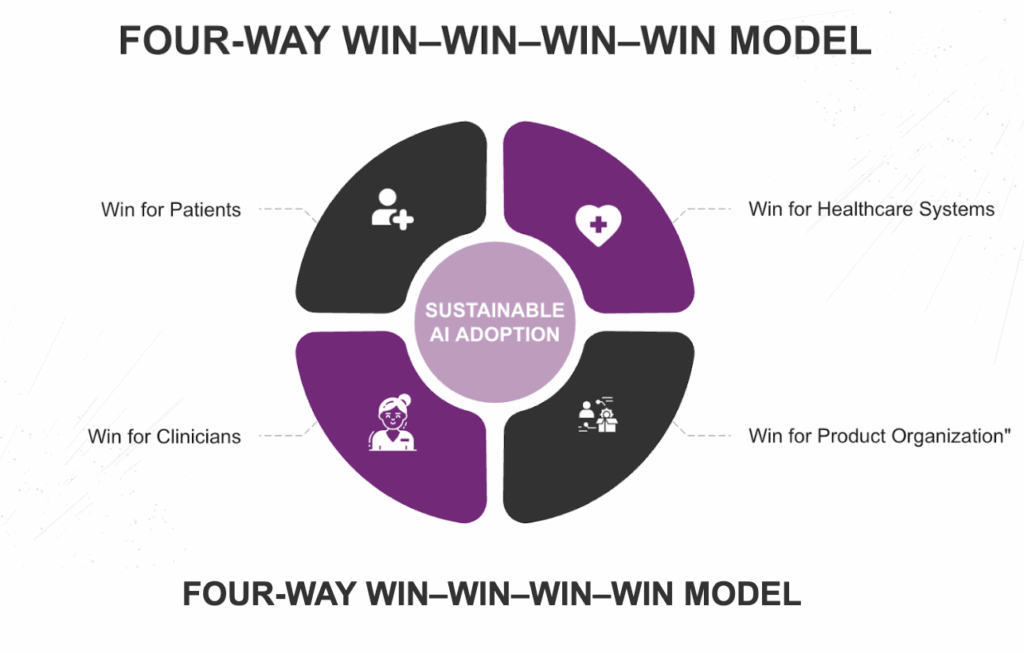
Beyond Point Solutions: A Win–Win–Win-Win Framework for Embedding AI into Oncology for Sustainable Impact Artificial Intelligence (AI) is often introduced into oncology with great promise of faster treatment planning, improved precision, and reduced clinician workload. But too often, these innovations remain isolated point solutions, powerful tools solving single problems in a vacuum. The outcome is […]