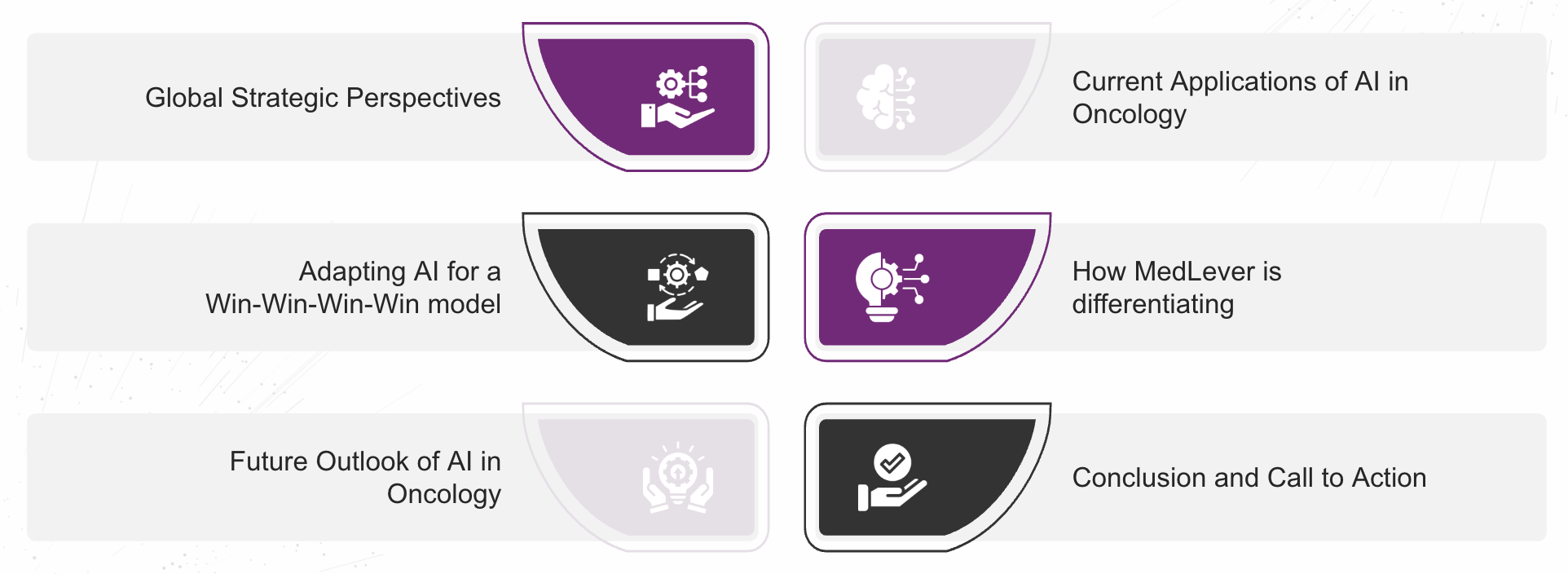
Introduction: The Integration Challenge
The promise of Artificial Intelligence (AI) in oncology is undeniable, yet realizing its potential depends less on algorithmic sophistication and more on its effective integration into daily clinical workflows.
The current landscape is dominated by fragmented AI “point solutions” single use tools that often disrupt clinical workflows, adding administrative burden instead of solving it. MedLever proposes a different path: The Workflow-First Model.
This post explores how MedLever’s platform exemplifies a sustainable, multi stakeholder framework that achieves measurable value across the entire cancer care ecosystem, delivering on the Win–Win–Win–Win promise.
The Core Challenge: Why Fragmented AI Fails in Oncology
Current AI approaches often create more friction than value because they fail to meet the needs of the highly complex, multi disciplinary oncology environment.
Disruption Over Integration
Fragmented tools often force clinicians to log into separate systems, duplicating data entry and pulling them out of their native EMR or PACS environment. This interruption erodes efficiency and system adoption.
Lack of Transparency and Trust
Black box AI models, without clear governance or clinical oversight, fail to build the necessary trust with users. Clinicians must understand why and how AI is generating insights for responsible use.
Scalability and IT Overhead
Every new point solution requires a custom integration. This high IT overhead makes system wide adoption and scaling future innovations nearly impossible for health systems.
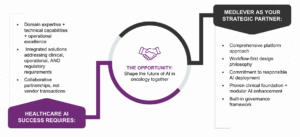
MedLever’s Differentiation: The Four Pillars of the Workflow-First Model
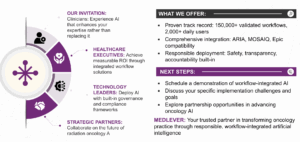
MedLever’s workflow native architecture transforms AI from an isolated feature into an orchestrated, end to end platform that amplifies clinical expertise and enhances operational performance.
1. Workflow-Native Architecture (Interoperability is King)
MedLever is designed to sit inside the clinical workflow, acting as an integration layer that pulls data and pushes insights without requiring clinicians to switch contexts. This seamless integration drives immediate adoption and efficiency gains.
2. Deep Oncology Expertise and Built-in Governance
The platform is built by and for oncology, ensuring clinical relevance and precision. Crucially, it includes a built-in governance framework that ensures responsible, transparent, and ethical use of AI insights.
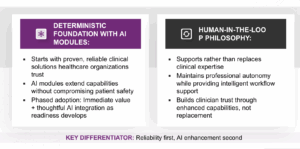
3. The Human-in-the-Loop Design (H3)
MedLever ensures the clinician always maintains ultimate control and oversight. The AI serves to amplify expertise by handling cognitive burden (e.g., aggregating patient data, identifying patterns) while confirming that the human remains in the decision making loop.
4. Modular and End-to-End Adoption
The platform offers a unified suite of tools, allowing health systems to adopt modules based on immediate needs. This strategy minimizes risk, ensures continuous value delivery, and provides a stable foundation for scaling future AI capabilities.
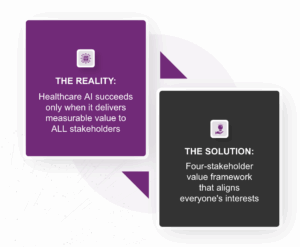
The Sustainable Impact: MedLever’s Win–Win–Win–Win Framework
MedLever’s architecture is designed to deliver measurable, sustainable value to every stakeholder in the cancer care continuum:
- Win 1: Patients: Improved Outcomes & Access. Key Benefit: Faster, more personalized, and less variable treatment planning.
- Win 2: Clinicians: Reduced Burden & Amplified Expertise. Key Benefit: AI automates routine tasks, freeing up valuable time for direct patient care and complex clinical reasoning.
- Win 3: Health Systems: Optimized Resources & Operational Performance. Key Benefit: Better utilization of expensive resources (like Linacs) and reduced IT integration costs via a unified platform.
- Win 4: Technology Partners: Sustained Innovation & Commercial Impact. Key Benefit: A high adoption, secure platform that allows for the stable embedding and scalable deployment of future AI products.
Conclusion: Integration Excellence is the Future
The future of oncology AI will not be defined by technological competition, but by integration excellence.
MedLever’s Workflow-First Model demonstrates that true clinical impact comes from embedding intelligence directly into the care delivery process. By delivering on the Win–Win–Win–Win model, MedLever offers a robust blueprint for how responsible, workflow embedded AI can move from conceptual promise to measurable clinical reality.
Authored By: Padmasri Bhetanabhotla