Introduction: The Next Frontier
As artificial intelligence becomes deeply embedded in healthcare decision-making, we are entering a new phase of adoption. We have moved past the era of experimental pilots and into the era of systemic accountability.
Regulation and governance have emerged as the next frontier in ensuring that AI enhances rather than endangers patient care. This post introduces our new series, Regulating Intelligence, where we examine the evolving regulatory landscape that is shaping the future of responsible AI deployment in healthcare.
Connecting the Dots
This discussion builds upon the pillars we have established in our previous series. We have covered the Evolution of the technology, the Anatomy of how models are built, the Evaluation frameworks for measuring performance, and the imperative of Bias Mitigation.
Now, we situate those technical and ethical imperatives within a broader system of accountability. Governance is the “connective tissue” that links technical excellence, ethical intent, and clinical trustworthiness. It ensures that the algorithms we build align with healthcare’s enduring principles: safety, equity, and accountability.
The Evolving Landscape
The global regulatory environment is shifting rapidly. We are witnessing a complex dynamic between fragmented oversight in the United States and the European Union’s unified approach through the AI Act. Simultaneously, a growing international movement is working toward harmonized governance principles to prevent a fractured global standard.
For healthcare organizations, navigating this landscape is critical. Understanding the difference between these regulatory approaches is no longer just for legal teams; it is a requirement for clinical and operational leadership.
From Compliance to Strategy
Perhaps the most important shift is in mindset. For forward-thinking organizations, compliance readiness and proactive bias auditing are no longer “check-the-box” exercises to satisfy an auditor.
They are strategic differentiators.
In the next phase of AI adoption, leadership will be defined by an organization’s ability to demonstrate safety and reliability. Governance is the mechanism that proves to patients and providers that an AI system is worthy of their trust.
Conclusion: Balancing Innovation and Safety
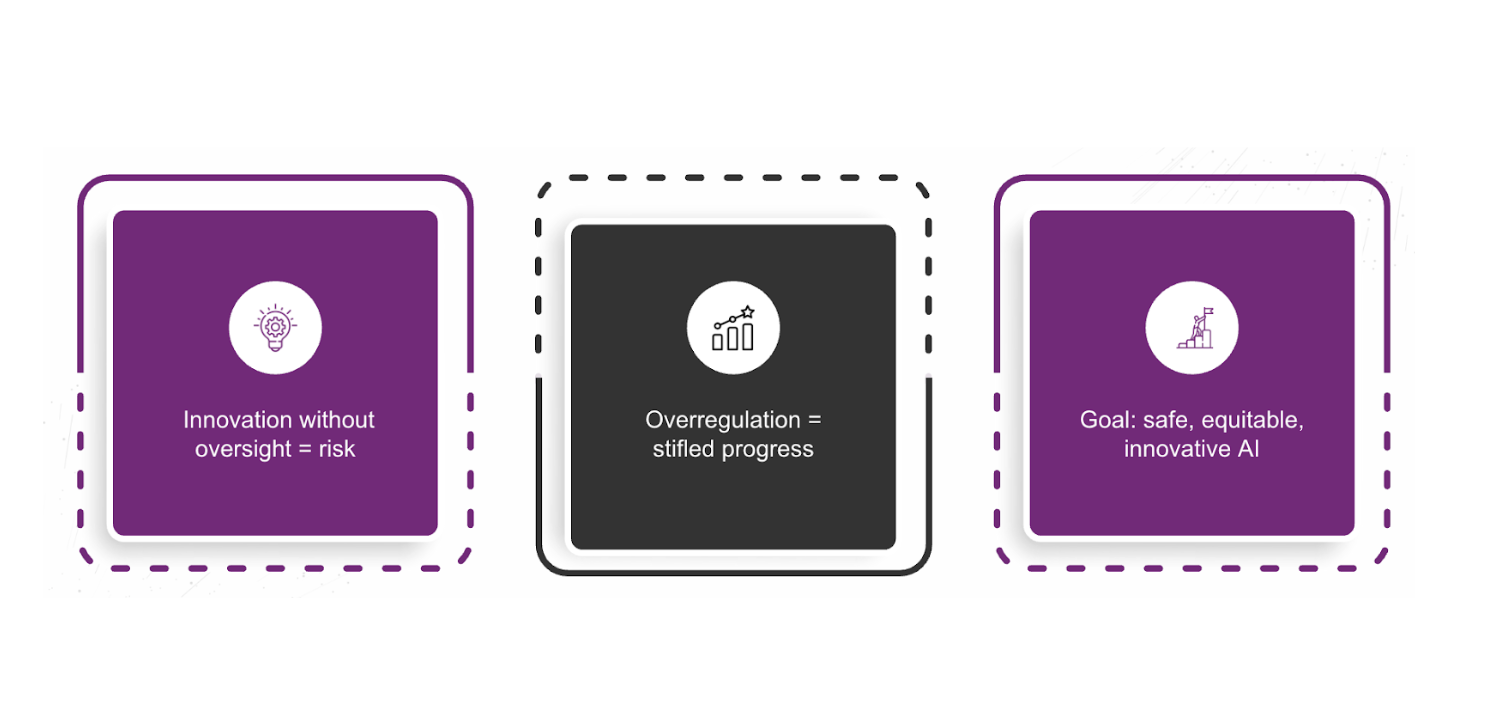
Ultimately, the goal of regulation is not to stifle innovation but to channel it safely. As we explore this topic, we will look at how regulatory bodies, healthcare organizations, and global alliances are working to balance the speed of AI development with the non-negotiable demands of patient safety, equity, and transparency.
Authored By: Padmasri Bhetanabhotla